Understand what each method contributes
Soft washing generally combines a compatible cleaning solution with low-impact application and controlled rinsing. Chemistry and dwell time do much of the work on appropriate organic growth, pollen, mildew-like staining, and atmospheric film. It still requires accurate dilution, a material review, testing, plant and property protection, public separation, and runoff planning. Low pressure is not automatically safe: an incompatible product, excess dwell, poor rinsing, or uncontrolled water can damage a finish or surrounding property.
Pressure washing depends more on water impact. It may be useful for durable compatible concrete, selected paved areas, loading surfaces, and other zones where material, condition, nozzle, distance, and drainage support the process. Too much impact can etch concrete, remove mortar, drive water into joints, damage coatings, or leave striping. The best Fayetteville quote explains where pressure has a role, where chemistry is more useful, and where neither method addresses a leak, failed sealant, corrosion, or damaged facade.
Match the method to Fayetteville materials and deposits
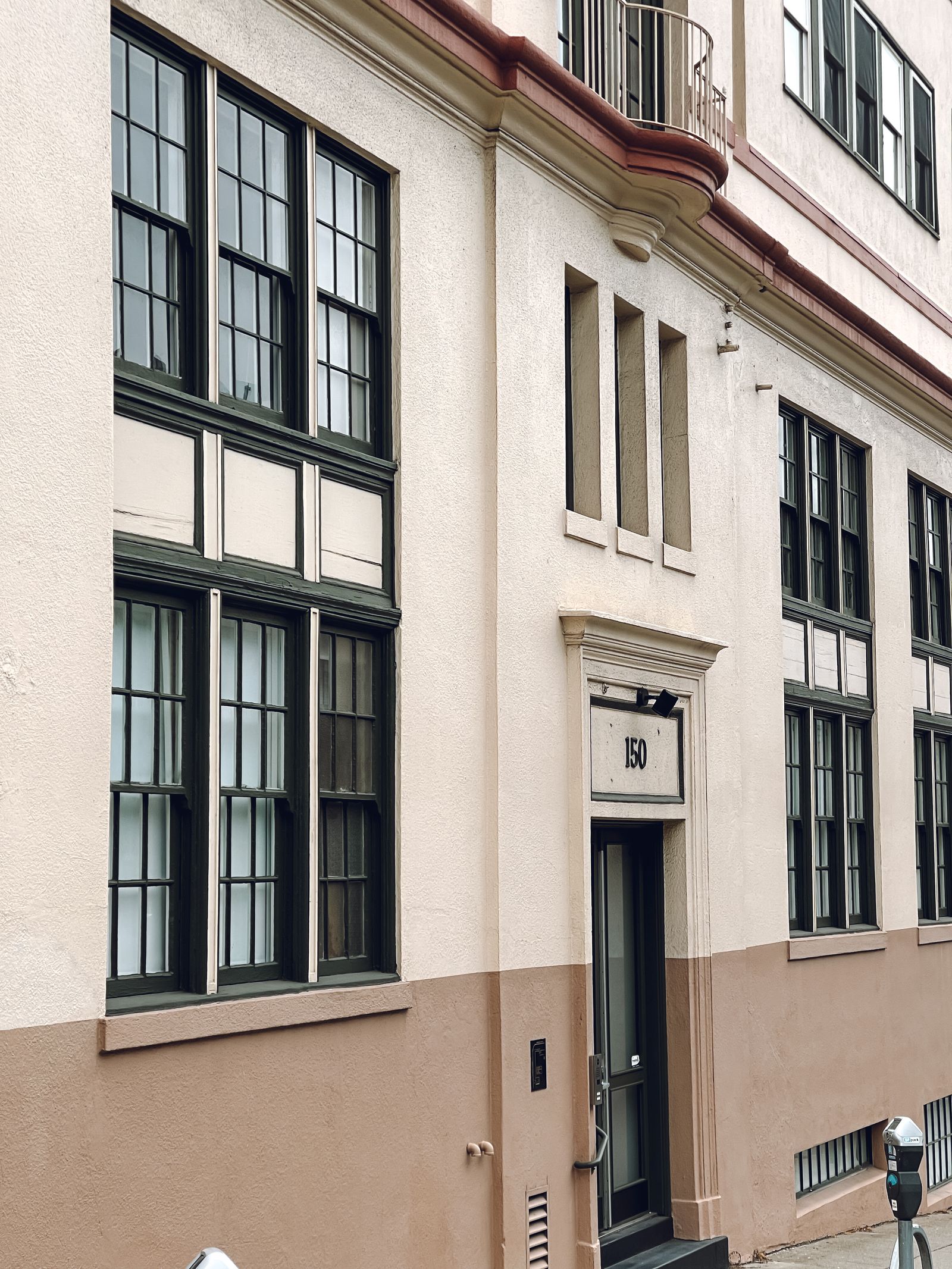
Brick and mortar need attention to porosity, joint condition, age, previous repairs, and water absorption. Concrete may accept a more direct rinse in one durable area but need a gentler approach where it is polished, cracked, coated, or spalled. Metal panels can show oxidation, chalking, traffic film, or coating failure rather than organic growth. Glass, EIFS, stucco, painted surfaces, stone, composite panels, sealants, awnings, and storefront trim each need a compatibility review. One elevation can contain several materials around a canopy, sign band, repaired section, or doorway.
The appearance of the deposit offers clues, not a final diagnosis. Green or dark film on a shaded, damp wall may be a candidate for compatible soft washing. White crust, rust-colored bleed, black carbon, efflorescence, and a line beneath a parapet may indicate minerals, oxidation, soot, salts, or water movement. Fayetteville's humidity, hills, tree cover, and heavy rain can make a drainage pattern look like a cleaning problem. A test area and condition notes are more useful than promising that one machine or chemical will solve every mark.
- Review masonry joints, concrete condition, glazing, panels, coatings, sealants, and repairs.
- Identify whether the deposit is organic, mineral, oxidized, salty, soot-based, or drainage-related.
- Test a representative area when finish history or cleaning response is uncertain.
- Separate cleaning from masonry repair, restoration, coating removal, and glass polishing.
Choose a process that fits the operating day
A method that works beside an empty warehouse may be poorly suited to an active clinic, hotel, school, office, or retail center. Downtown Fayetteville and Dickson Street may have pedestrians, patios, events, apartments, restaurants, and limited curb staging. A property near the University of Arkansas may have student foot traffic, campus-adjacent activity, apartments, shared parking, and calendar-driven surges; that context does not mean the property has a university relationship or contract. Retail properties near College Avenue, Wedington Drive, Joyce Boulevard, or the former Fayetteville Mall area may need customer parking, drive-through lanes, landscaped islands, and several tenant entries open.
Medical and office corridors require attention to patient drop-off, accessible paths, security, quiet periods, and air intakes. Industrial and logistics sites near Airport Road or I-49 can have trailers, gates, forklifts, production schedules, and shift changes. A proposal should explain staging, dwell time, rinsing, noise, hose routing, barriers, and entrance sequencing. The method is suitable only when the building can keep serving patients, visitors, students, employees, tenants, guests, and deliveries without an unmanaged access or safety issue.
Account for Ozark terrain, humidity, pollen, and storms
Fayetteville weather and terrain affect how a solution dwells, how fast a wall dries, where rinse water travels, and whether a result is repeatable. Warm humid periods can keep shaded masonry damp and support recurring organic film. Spring pollen can settle on horizontal ledges, signs, canopies, and entry features. Hills can move water toward a lower drive, planting bed, or storm inlet. Rain can dilute chemistry and carry soil across a clean section. Thunderstorms and gusts can move mist, affect aerial stability, close public areas, and make the planned window unsafe.
A weather-aware comparison includes temperature, wind, precipitation, lightning, surface moisture, and drying expectations. It also includes pause triggers and a rescheduling plan. A sunlit metal wall, shaded brick elevation, covered entry, and lower wall beside a parking lot may need different timing. If testing shows oxidation, mineral scale, embedded soot, old coating failure, or a drainage defect, the honest next step is to explain the limitation or pursue a different treatment rather than increase pressure without a surface reason.
Treat access and drone assistance as separate decisions
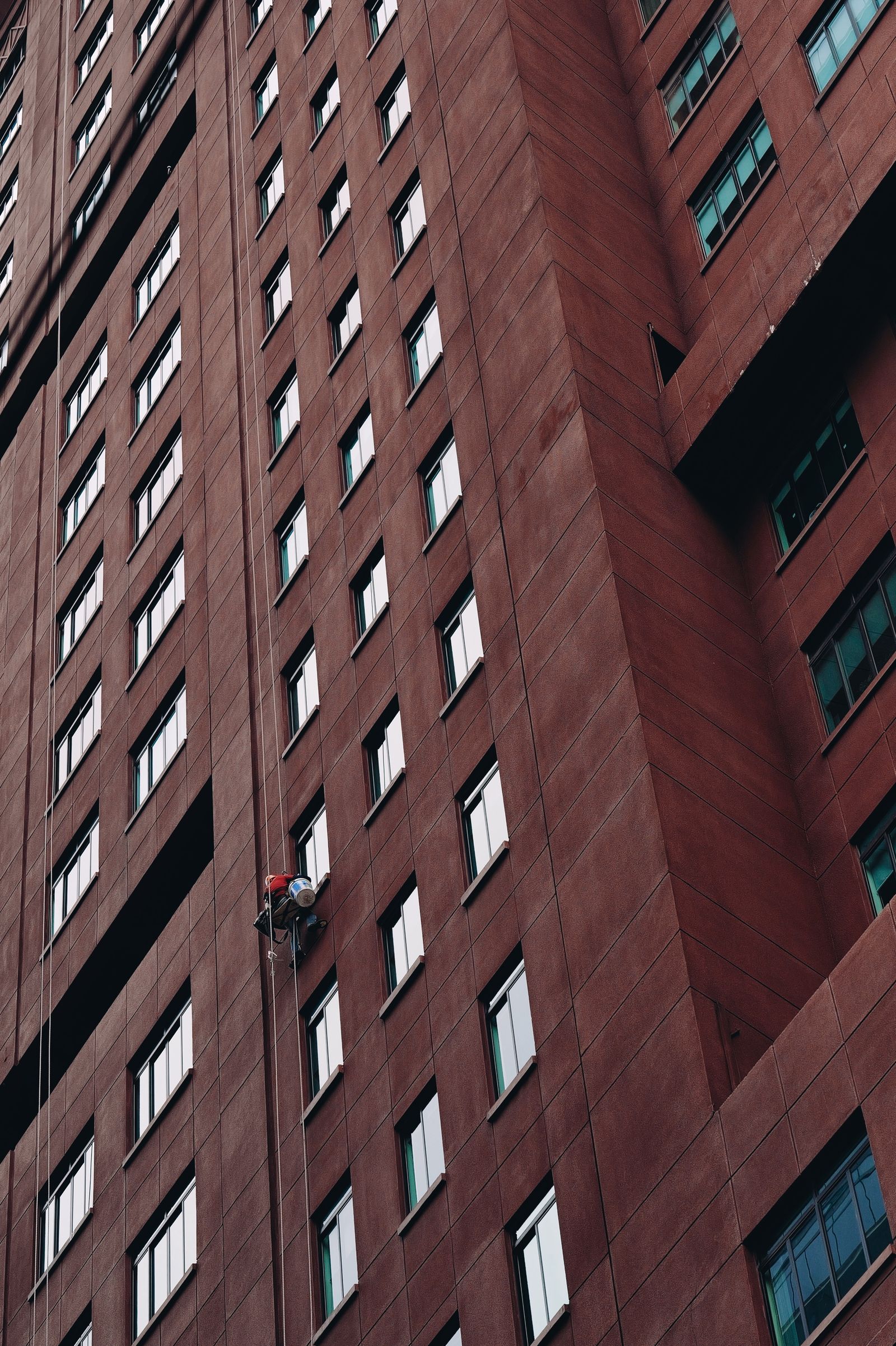
For a Fayetteville property, aerial support is an access option rather than a substitute for either soft washing or pressure washing. On a suitable upper elevation, it may position a controlled application or rinse while reducing lift repositioning. It still requires launch space, stand-off distance, visual control, workable Ozark wind, public separation, and ground coordination, and it does not inspect concealed conditions, detail glass, remove bonded minerals, or repair a facade.
Fayetteville properties may include overhead lines, mature trees, rooftop equipment, balconies, signs, busy roads, neighboring buildings, and constrained downtown staging. Applicable Federal Aviation Administration requirements still apply to commercial operations. Owner permission does not replace aviation compliance or make people, vehicles, overspray, and runoff automatically controlled. If those conditions are unfavorable, a water-fed pole, lift, hand detail, or ground setup may provide a better result. The building should determine the access mix rather than the access tool determining the cleaning method.
Compare protection and runoff planning, not just pressure numbers
Both processes create water-management responsibilities. Fayetteville properties may drain toward curb inlets, sloped parking, grass swales, detention areas, pavement joints, or a neighboring low point. The product, soil removed, rinse volume, slope, stormwater system, and site requirements matter. A nearby inlet is not automatic permission for treated water or sediment to enter it. Before work, identify flow paths and decide whether diversion, collection, recovery, filtration, reduced rinse volume, plant protection, disposal, or authority coordination is appropriate.
Protection also covers doors, accessible paths, vehicles, landscaping, outdoor seating, cameras, electrical equipment, air intakes, and people. A low-pressure process can still harm a sensitive opening or create a slippery walkway. A high-pressure process can be appropriate on durable concrete and damaging on a weak joint or coating. Ask for the test-area plan, method by zone, access equipment, weather triggers, included elevations, exclusions, water assumptions, and documentation of remaining conditions. These details help a facility team compare proposals on outcome and risk instead of on a headline machine setting.
How to choose for a Fayetteville commercial property
For a Fayetteville proposal, ask the provider to identify surface materials, likely soils, pressure range, chemistry, test-area process, protection, drainage assumptions, access method, weather limits, and included elevations. Ask which areas use aerial assistance, pole work, lift work, hand detail, or ground cleaning, and what happens if a deposit is mineral, oxidized, salt-based, soot-based, or connected to a repair. This is more useful than choosing a method by label.
For a Fayetteville office, clinic, hotel, school, retail center, mixed-use property, university-adjacent building, or industrial site, share the address, photos, approximate height, desired result, schedule restrictions, and water access. Call +1 239-351-2897 or email contact@dronebuildingcleaners.com to get in touch with Drone Building Cleaners. We can discuss the facade, operating day, weather window, access, drainage, and the next practical step for a quote.